
Should I Charge a Callout Fee on Small Jobs? A UK Trades Owner's Decision Guide
A callout fee filters out time-wasters and pays for your van time, but get it wrong and you lose good jobs to the firm down the road. Here's a no-nonsense framework for deciding whether to charge one on small jobs, and how to present it so customers say yes.
Last edited: 24 Sept 2026
Everything described here runs on the same diary you can open in the live demo.
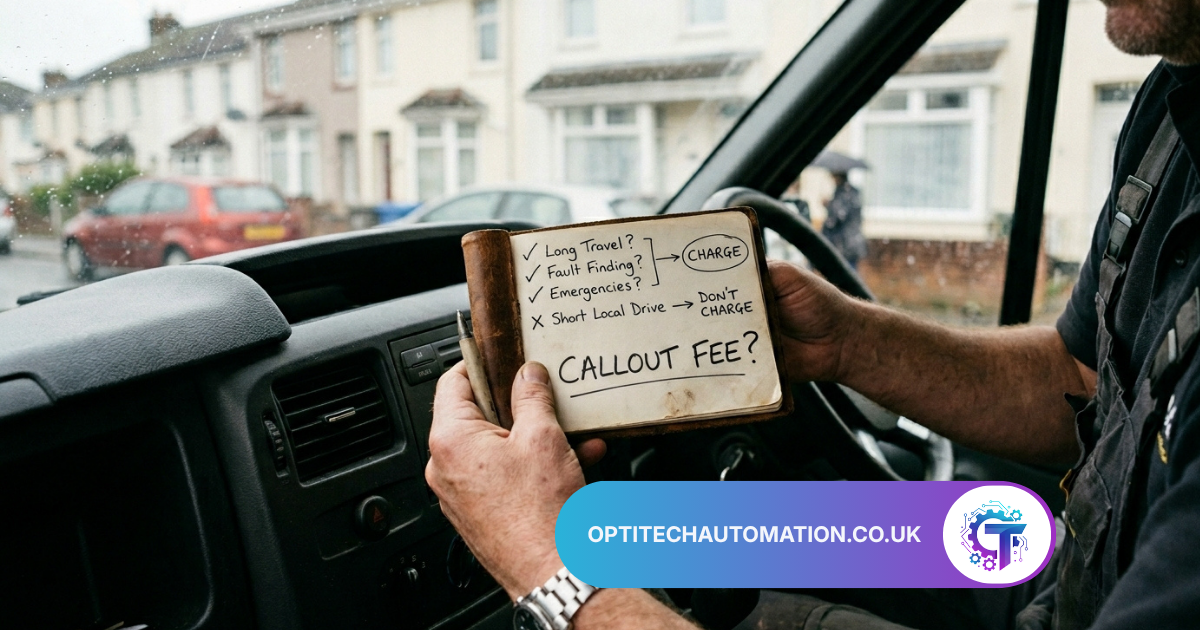
Should you charge a callout fee for small jobs as a tradesman in the UK? Yes, charge a callout fee or a small booking deposit when your time and travel are the main cost and time-wasters are eating your week, and many trades waive it if the job goes ahead. The decision comes down to three things: how often you get no-shows, how far you drive, and how you present the fee. Get the framing right and customers barely blink. Get it wrong and you hand work to the firm down the road.
I'm a sole trader in Torbay. I've driven 40 minutes to a "quick look" that turned into a chat on the doorstep and nothing else. That drive is the whole reason callout fees exist. Below is the way I actually think it through, plus a scorecard you can run in 30 seconds.
New research: we read the published prices of 130 UK trade firms. The median call-out minimum is £85 (electricians £92, gas engineers £90, plumbers £80). See the full call-out fee study, or the plumber, electrician and gas engineer breakdowns.
How to calculate a call-out fee (the actual sum)
Work out what the visit costs you door to door, then set the fee so that number is covered before you pick up a spanner. Most of us price the hour on site and quietly donate the driving. That is why small jobs feel busy and pay badly.
Four things go into the sum:
- Door-to-door time. Not the time on site. The time from leaving your last job to being back on the road, including parking and the chat on the doorstep.
- Vehicle cost for the trip. Fuel, wear, and any parking or congestion charge you actually pay.
- Your real charge-out rate. Not what you wish you earned. Take what the business has to cover in a year and divide it by the hours you can genuinely charge for, which is always fewer than the hours you work.
- What the fee includes. Decide up front whether it is attendance only, or attendance plus the first half hour and a diagnosis. Either is fine. Saying it on the phone is what stops the argument later.
Then the sum is simply:
Call-out fee = (door-to-door hours x your charge-out rate) + vehicle cost for the trip
A worked example with round numbers, so you can swap your own in. Say your charge-out rate is 45 pounds an hour, and a typical local visit is 40 minutes driving there and back plus 20 minutes on the doorstep. That is one hour door to door, so 45 pounds, plus roughly 6 pounds of fuel and wear. Your call-out fee needs to start at 51 pounds before you have fixed anything. Round it to 55 and the visit covers itself instead of quietly costing you.
Two rules that keep it honest. If you waive the fee when the work goes ahead, say so at the moment you quote it, because that is the line that makes customers relax. And if you travel outside your normal patch, price that extra travel separately rather than pretending the standard fee swallows it.
These are your numbers, not market numbers. Nobody can tell you the right call-out fee for your area, and any figure you read online is somebody else''s business with somebody else''s costs. The point of the sum above is that your fee stops being a guess.
Should I charge one? (the quick yes-if / no-if)
Charge a callout fee or booking deposit if:
Your travel time to the job is a real chunk of the work (rural patch, long drives, lots of small one-off visits).
You're getting no-shows or last-minute cancellations that leave a dead slot you can't refill.
The visit is diagnostic or quote-only and you might walk away with no paid work.
It's out-of-hours, weekend, or genuinely an emergency response.
Don't charge (or soften it) if:
You work a tight, busy urban patch where the drive is ten minutes and competitors don't charge.
The job is dead simple and almost always converts into paid work anyway.
It's a first-time customer who's nervous about being stung, and the fee is the thing that makes them ring the next name on the list.
If you're somewhere in the middle, go hybrid: take a small booking deposit that comes straight off the bill when the job goes ahead. You filter the tyre-kickers without scaring off the genuine ones.
Callout fee vs deposit vs minimum charge: what's the difference?
People muddle these three, and that's where the awkward conversations start. They do different jobs.
Callout fee: a charge for turning up. It covers your travel and the slot, whether or not work follows. Often waived or knocked off the bill if the job proceeds.
Booking deposit: money taken up front to secure the slot. It's not a separate charge; it comes off the final invoice. Its main job is commitment, so people don't ghost you. (More on the how in how to take a deposit before a job for UK trades.)
Minimum charge: the floor for any job. "Nothing under £X." It protects you on tiny tasks where the labour is five minutes but the trip and setup aren't.
You can run more than one. A common combo: a minimum charge so small jobs are worth your while, plus a deposit on first-time or higher-risk bookings so nobody wastes your slot.
When does charging a callout fee make sense?
Charge when your cost is mostly time and travel, not materials. That's the core test. Specific cases where it earns its keep:
Long or unpredictable travel. If half your "small jobs" are 30 to 40 minute round trips, a callout fee just prices in what it actually costs you to show up.
Quote-only and diagnostic visits. Fault-finding is skilled work. If you're spending an hour tracing an intermittent fault and the customer "thinks about it," you've worked for free. A fee that's credited against the repair fixes that.
Time-wasters. Some people ring three trades to pick their brains with no intention of booking. A modest fee makes those callers self-select out before you've burned a morning.
Out-of-hours and emergencies. Evenings, weekends and call-outs at 11pm should cost more. Customers expect that. A premium for unsociable hours is normal and fair.
When can a callout fee cost you work?
Be honest about this. A callout fee is a filter, and a filter blocks some good jobs too.
It costs you when you're in a competitive area and the firm next door doesn't charge, so the customer just rings them. It costs you on dead-simple jobs that almost always convert, because there the fee is friction with no upside. And it costs you with first-timers who don't know you yet and read "callout fee" as "this one's going to nickel-and-dime me."
How to soften it without dropping it:
Waive on proceed. "The £X callout is knocked straight off if you go ahead." Now it's only ever paid by people who waste your time, which is exactly who you want it to land on.
Frame it as a deposit, not a fee. "Small deposit to hold the slot, comes off your bill." Same protection, friendlier word.
Bundle it into the quoted price on simple jobs so there's no separate line item to flinch at.
How much should a callout fee be?
Enough to cover a meaningful share of your time and travel to that job, and no more. It isn't a profit centre, it's a cost-recovery and filtering tool. Price it too high and it stops being a filter and starts being a wall.
I'm not going to print a number, because the right figure depends on your patch, your trade and your van costs, and a plumber in central Bristol and a heating engineer covering rural Devon should not land in the same place. Work it out from your own travel time and slot value rather than copying a figure off a forum.
Two rules that travel well:
Credit it against the work. The "waive on proceed" move turns a charge people resent into a deposit they barely notice. It's the single biggest reason customers accept it.
Charge more out of hours. Your evening and weekend rate should sit above your weekday one. Nobody sensible argues with that.
A simple decision scorecard
Score each line 0, 1 or 2 and add it up.
Travel time to a typical small job: under 15 min (0) / 15 to 30 min (1) / over 30 min (2)
No-show or late-cancel history: rare (0) / occasional (1) / frequent and it stings (2)
Typical small-job value: high, materials-heavy (0) / mixed (1) / low, mostly my labour (2)
Local competition on price: fierce, nobody charges (0) / mixed (1) / I'm in demand / specialist (2)
Total 0 to 2: Don't charge. Use a minimum charge if anything.
Total 3 to 5: Hybrid. Take a small deposit that comes off the bill, especially for first-timers and bigger slots.
Total 6 to 8: Charge a callout fee, waived on proceed. Your time and travel are the product, and a filter pays for itself.
How do I present it so customers actually accept it?
Acceptance is almost entirely about when and how you say it, not the amount. The rule: say it before they book, in plain words, tied to what they get.
Be upfront. Put it in the conversation at the point of booking, not as a surprise on the invoice. Surprises are what generate bad reviews, not fees.
Tie it to value. "That covers me coming out, diagnosing the fault, and it comes off the repair." Now it sounds like a service, not a tax.
Put it in writing on the booking confirmation. When the customer sees the fee, the time, and that it's credited against the work, all in the confirmation they agreed to, disputes basically vanish. This is where a proper booking step earns its keep: you can book jobs with a callout fee or deposit built in so the terms are stated and agreed before you ever turn the key in the van. (If you're still juggling this in a notebook, spreadsheet vs booking system for UK trades is worth a read.)
Stay calm if they push back. "Totally understand. The fee's there because I block out the slot and the travel for you, and it comes off if you go ahead." Most people accept it once they hear the reason.
If you decide a callout fee is right for your work, the live demo shows it being charged at the moment the customer picks a slot.
FAQ
Is it legal to charge a callout fee in the UK?
Yes. A callout fee, deposit or minimum charge is a normal commercial term. The key is that the customer is told clearly before they agree, so the charge forms part of the contract. Under UK consumer law your terms must be transparent and fair, which in practice just means: state it up front, put it in writing, and don't spring it as a nasty surprise. For the underlying rules, see the Consumer Rights Act 2015.
Should I refund the callout fee if they go ahead with the job?
That's the popular "waive on proceed" model, and I'd recommend it for most trades. Credit the fee against the final bill so it's only ever truly paid by people who waste the visit. Whatever you choose, make the rule explicit on the booking confirmation so there's no argument later.
What's the difference between a callout fee and a minimum charge?
A callout fee covers turning up and is often waived if work follows. A minimum charge is the floor for any completed job, regardless of how small. You can use both: the minimum charge stops tiny jobs being unprofitable, the callout fee or deposit protects you against no-shows and quote-only time.
Can I charge an emergency or out-of-hours premium?
Yes, and you should. Evening, weekend and emergency response is worth more than a planned weekday visit, and customers expect to pay for it. State the out-of-hours rate clearly when they call so it's agreed before you head out.
How do I stop customers ghosting me after I've given a quote?
Two moves. Take a small booking deposit that comes off the price, so there's skin in the game. And for diagnostic or quote-only visits, charge a callout fee that's credited against the repair. People who are only fishing for free advice tend to disappear the moment there's any commitment, which is exactly the result you want. If chasing payment after the job is the bigger headache, how to get invoices paid on time for UK trades covers that side.
Key takeaways
Charge when time and travel are your main cost and time-wasters are hurting you; lean off it in cheap-to-reach, fiercely competitive patches.
Know the three tools. Callout fee (turning up), deposit (commitment, comes off the bill), minimum charge (the floor). Mix as needed.
"Waived on proceed" is the magic phrase. It turns a resented charge into a deposit, and it's the biggest single driver of customers saying yes.
Run the scorecard. Travel time, no-show history, job value and local competition tell you charge / don't / hybrid in under a minute.
Presentation beats price. Say it before booking, tie it to what they get, and put it on the confirmation in writing.
Don't copy a number off a forum. Set the amount from your own van costs and slot value.
Want help setting your booking rules so deposits and callout fees are agreed before the job? Talk to us, or set yourself up to book jobs with a callout fee or deposit built in.
Keep reading



New here? See how OptiTech Automation works or view pricing. Or see what these figures mean for your business, in your own numbers.
Letters to the editor
Leave a letter
Add your name to the conversation. Approved letters appear within a day.