
The Economics of the No-Show: What Last-Minute Cancellations Are Actually Costing UK Trades
A last-minute cancellation feels like bad luck. The numbers say it is structural, and it is fixable with one change made at the moment of booking, before the van ever leaves the yard.
Last edited: 03 Oct 2026
Everything described here runs on the same diary you can open in the live demo.
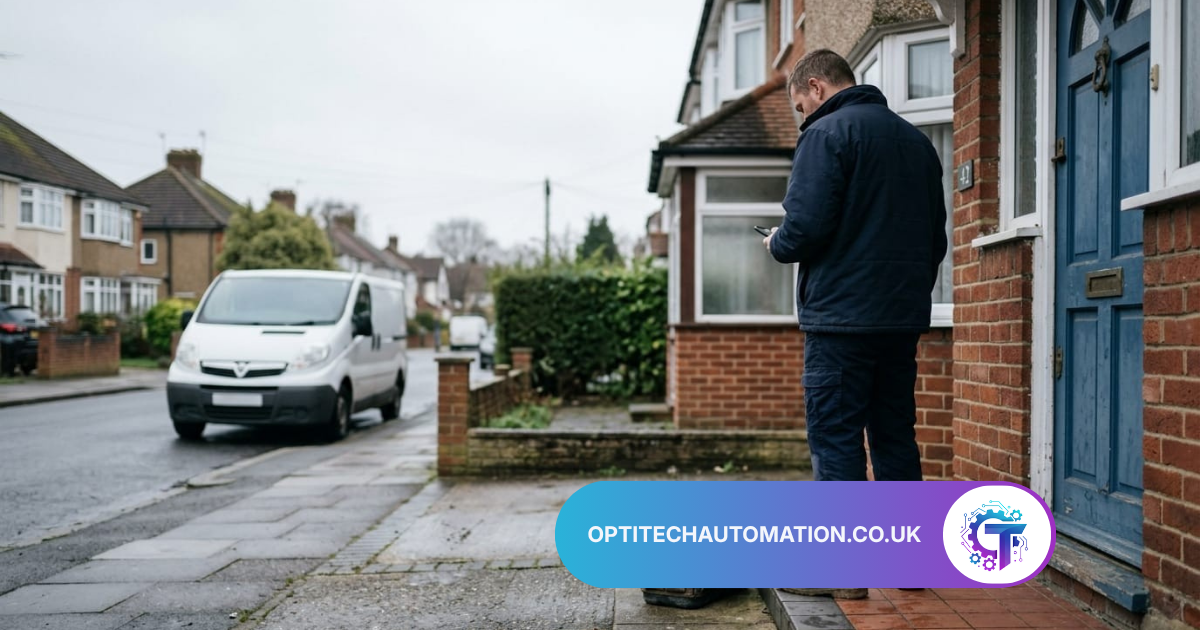
You know the feeling: 7:52am, van loaded, twenty minutes into a drive, and the phone rings. "Really sorry, something's come up." That slot, your morning and maybe your whole day, just evaporated. The customer paid nothing to book it and nothing to cancel it, which is exactly why it happened. The no-show isn't bad luck. It's the predictable outcome of asking someone to hold a slot in their head without asking them to hold it with money.
This is the piece I wish I'd read three years ago. Not because the solution is complicated (it isn't, and most of us already knew it somewhere) but because I never sat down and worked out what it was actually costing. Once I did the numbers, the awkwardness of asking for a deposit upfront felt very small indeed.
What does a no-show actually cost?
The polite version is "an inconvenience." The accurate version involves working out your day rate, your fuel, your van standing cost, and the job you couldn't take because that slot was blocked. Here's a back-of-the-envelope:
A qualified trades business in the UK typically prices jobs at a minimum of £180 to £350 for a half-day call-out, more for specialist work.
Fuel and travel for a wasted journey: £8 to £25, depending on distance.
That slot was blocked in your diary, so any other job you might have taken wasn't quoted, wasn't won, wasn't done.
Your working week has roughly 10 chargeable half-day slots. One no-show is 10% of your week, gone.
Two no-shows a month is not unusual for a busy trades business operating without deposits. Two half-day slots a month, across 12 months: that's 24 lost slots. At even a modest £200 per slot, that's £4,800, sitting idle and not in your bank account. For busier businesses, or those where jobs run longer, the number is worse.
And that's before you count the indirect cost: the quote you didn't follow up, the new customer you weren't available for, the review you didn't earn.
Why no-shows keep happening
It isn't that your customers are careless. It's that booking without money down costs them nothing to undo. That's not a character judgement: it's just how humans work. Behavioural economics has a name for it: when something is free to abandon, most people don't feel the weight of keeping it.
Think about your own life. You treat a dinner reservation you've already paid a deposit on differently to one you haven't. You treat a dentist appointment you'd lose £30 to cancel differently to one that's just a note in someone's diary. The mechanic who takes your car keeps it until you pay, so you're not in a position to forget.
Trades businesses have historically not asked for deposits upfront. Part of that is convention: it didn't used to be easy to take card payments before arrival. Part of it is the fear of looking mercenary or distrusting customers. But salons ask for one. Specialists ask for one. Hotels have always asked for one. The only people who don't, typically, are tradespeople, and they pay the price in empty doorsteps.
The deposit changes the economics completely
A deposit doesn't just protect your cash. It signals to the customer, and to their own brain, that this booking is real. Money down creates a different mental category: this isn't a tentative plan, it's a commitment that has already partially happened.
In practice, what changes:
Cancellations drop. Not to zero, because things do genuinely come up, but the reflexive, low-friction "something came up" call mostly disappears. People who've paid something don't treat the slot as disposable.
Late cancellations change character. When someone who's paid a deposit has to cancel, they're motivated to give you as much notice as possible, because they want the refund. Early notice is far less damaging than 7:52am.
You filter enquiries. A customer who won't pay a deposit to secure a skilled trade's time was always more likely to be a problem: to haggle on arrival, dispute the invoice, or cancel. The deposit is a quiet filter, not a barrier.
Your cash position improves. A portion of money arrives before you've done a stroke of work, which is a fundamentally different relationship with cash flow than invoicing and then waiting.
How much should the deposit be?
Enough to create commitment, not so much it feels like you don't trust them. A rough guide:
10 to 25% of the estimated job value is the standard range. On a £600 job, that's £60 to £150, meaningful to both parties and not burdensome.
A flat booking fee (£30 to £75) works well for call-out jobs where the final cost varies. It covers your travel regardless of what happens.
50%+ upfront is common for specialist, high-materials jobs: bathroom fits, full rewires, large HVAC installations. Nobody blinks at this in construction.
The number matters less than the existence of one. Even £25 on a £400 job changes the psychology enough to matter. If you want the figures broken down by job type, how much deposit a tradesman should ask for goes through them properly.
"My customers won't accept it"
They already do, everywhere else. This is the objection I held longest, and it dissolved the moment I actually asked. A few things worth knowing:
The customers who object most vocally to deposits are, disproportionately, the customers most likely to cancel or cause payment problems. This is not a coincidence. It's information.
When it's presented clearly, as in "I take a small deposit to hold the date, which comes off your final invoice; refundable if you give me 48 hours' notice", virtually every reasonable customer accepts it without hesitation. The logic is fair and they understand it. They've encountered it before, just not with a tradesperson.
And if someone refuses to pay any deposit to secure a skilled engineer's time, it's worth asking what that tells you about how they're likely to behave when the invoice comes.
The operational problem: taking deposits used to be difficult
For a long time, the real barrier wasn't customer willingness: it was mechanics. Getting a card number over the phone, sending a bank transfer request and chasing it, dragging out a card reader on arrival: none of these are clean deposit processes at the point of booking. Most trades businesses gave up and didn't bother.
That's changed. The modern way is a payment link embedded directly in the booking confirmation, so the moment a customer books online, they're prompted to pay the deposit as part of the same flow. No separate step, no phone call, no chasing. It's just part of how the booking works. They book, they pay, they're confirmed. The slot is real to them from the first moment. The step by step version, including the wording to use, is in how to take a deposit before a job.
This is how OptiTech Automation handles it: Stripe processes the deposit at booking, you set the amount once, and it runs automatically. No admin on your part. The deposit holds until job completion, where it's applied to the final balance. If you need to cancel your side, the refund is one click. The system handles the money; you handle the work. Stripe's own processing fee still applies, exactly as it would on any card payment, and what each tier costs and what it includes is published on the pricing page.
What about jobs you have to cancel?
A fair deposit policy protects both sides. The standard approach: full refund if the customer cancels with 48 hours' notice or more, deposit retained if they cancel with less than 24 hours. You keep your right to the same reciprocity: if you cancel without reasonable notice, you refund it, and you've also damaged that relationship.
The fairness of that is visible to anyone who reads it. Most customers don't mind a clear policy that works symmetrically. It's the vague, one-sided arrangements that feel exploitative.
In practice, legitimate life emergencies, the ones you'd exercise your own judgement about, are the minority. Building a policy for the edge case means you pay for it every time with the normal cases.
FAQ
Is it normal for a tradesperson to ask for a deposit?
Increasingly, yes. Specialists, larger contractors, and newer trades businesses with online booking have been asking for deposits routinely for several years. Customers who book services in any other sector, from hotels and salons to dentists and event venues, are completely used to it. The "trades don't ask for deposits" convention is eroding, and quickly.
Won't customers just go to the competitor who doesn't ask for one?
Some might. But a business that doesn't ask for a deposit is more exposed to no-shows, which means they're less reliable, which means their availability is more erratic. Customers who take your work seriously enough to want it done well tend to respect a clear, professional process. The ones who won't pay any deposit to hold a skilled person's time are often not the customers you want.
What's the best way to explain a deposit to customers?
Plainly and briefly. "I take a [£X / X%] deposit to confirm the booking, which comes off your final invoice. If you need to cancel, I ask for 48 hours' notice and I'll refund it in full." Most people need no further explanation. It's the same policy they deal with in most of their life. The mistake is over-explaining it, which signals that you think it's unusual when it isn't.
How do I handle it if I have to cancel?
Refund it promptly, apologise, and rebook. This is the same good faith you're asking of the customer. A tradesperson who retains deposits when they cancel has a very short career. Word travels. Treat the policy as genuinely symmetrical and it builds trust rather than eroding it.
What percentage deposit should I charge?
10 to 25% of the job value is the most common range, or a flat booking fee of £30 to £75 for variable-cost call-outs. For high-materials jobs such as bathrooms, full rewires and large installations, 50% upfront is standard in the trade and nobody blinks. The exact figure matters less than having one. Even a small deposit changes the customer's relationship with the booking.
Key takeaways
A no-show isn't bad luck: it's the predictable result of a booking that costs nothing to abandon. Two per month across 12 months can easily represent £4,000 to £8,000+ in lost revenue.
A deposit doesn't create distrust: it creates commitment. Customers who've paid something treat the slot differently, give notice when they must cancel, and tend to be easier to work with generally.
10 to 25% of job value is the normal range. A flat booking fee works well for call-outs. High-materials jobs often warrant 50% upfront.
"My customers won't accept it" is the most common objection, and the least accurate. Present it as a clear, fair policy and the great majority of customers won't question it.
The mechanics no longer have to be hard. Payment at booking, via a link in the confirmation, means the deposit is collected without a separate step, a phone call, or any admin on your part.
A fair policy is symmetric: refund with reasonable notice on both sides. That fairness is what makes customers accept it without resentment.
If you want to see how the deposit flow works in practice (the booking page, the Stripe integration, the confirmation) you can see how it works here. And if the question is whether this applies to your specific kind of work, fifteen minutes on a call answers it faster than any article can.
Keep reading


New here? See how OptiTech Automation works or view pricing. Or see what these figures mean for your business, in your own numbers.
Letters to the editor
Leave a letter
Add your name to the conversation. Approved letters appear within a day.