
How Much Should a Tradesman Charge Per Hour in the UK?
Most UK tradespeople price what feels fair rather than what it costs to run a business. Here is how to calculate an hourly rate that covers your real costs, pays you properly, and does not scare off the customers you actually want.
Last edited: 03 Oct 2026
Everything described here runs on the same diary you can open in the live demo.

Most UK sole traders should be charging somewhere between £35 and £60 an hour, but the honest answer is: the right rate is whatever covers your real costs, pays you a proper wage, and still leaves a margin. The mistake almost everyone makes is pricing what feels fair to the customer instead of what it actually costs to run the business behind the van.
When I started looking at the numbers behind trade businesses around Torbay and across Devon, the same pattern came up again and again. A skilled grafter would quote £30 an hour because the bloke down the road quoted £30, never once working out that after the van, the insurance and the unpaid Sunday-night admin, he was effectively paying himself less than the kid stacking shelves at the Co-op.
The real cost of running a one-person trade operation
Before you can set an hourly rate, you have to be honest about what you're actually carrying. The customer sees one person turning up. Behind that person sits a pile of costs that never goes away:
- Van. Finance or depreciation, fuel, road tax, MOT, servicing, tyres. Easily £4,000 to £7,000 a year.
- Insurance. Public liability, tools, sometimes professional indemnity. £400 to £1,200+ depending on trade.
- Tools and equipment. Replacement, calibration, hire of the big kit you can't justify buying.
- Certifications and memberships. Gas Safe, NICEIC, scheme fees, CPD, recertification.
- Admin and unbillable time. Quoting, chasing payments, ordering materials, driving between jobs. This is the silent killer: you might bill 25 hours in a 45-hour week.
That last point is the one nobody factors in. You don't get paid to drive to the merchant or to sit up writing quotes. So your billable hours are far fewer than your working hours, and your rate has to absorb the difference.
The formula: work backwards from what you want to take home
Here's the calculation that changes everything. Don't start with the customer. Start with you.
(Target take-home + annual business costs) ÷ billable hours = minimum hourly rate.
Let's run it properly. Say you want to take home £38,000 a year, a fair wage for a skilled tradesperson. Your annual running costs (van, insurance, tools, certs, accountant, phone) come to £12,000. That's £50,000 you need to bring in before you've earned a penny of profit on top.
- You work roughly 45 weeks a year (after holiday, sickness, slow weeks).
- You bill maybe 25 hours a week, and the rest is travel, quoting and admin.
- 45 × 25 = 1,125 billable hours a year.
- £50,000 ÷ 1,125 = £44.40 an hour, just to break even on your target.
If you've been charging £30, you now understand why you're always busy and never have any money. You're working harder to earn less. The fix isn't more jobs, it's the right rate.
Working rate ranges by trade
Rates vary by trade, region and risk. These are realistic working ranges for a self-employed UK tradesperson in 2026:
- Gas engineer: £45 to £70/hr (the cert and the liability justify the premium).
- Electrician: £40 to £65/hr.
- Plumber: £40 to £60/hr.
- Drainage: £50 to £80/hr (specialist kit, unpleasant work, fewer competitors).
- Plasterer: £35 to £45/hr, though most plasterers quote by day or by job, not by hour.
Hourly vs day rate vs fixed price
The hourly rate is your foundation, but it's not always how you quote. Each model has its place:
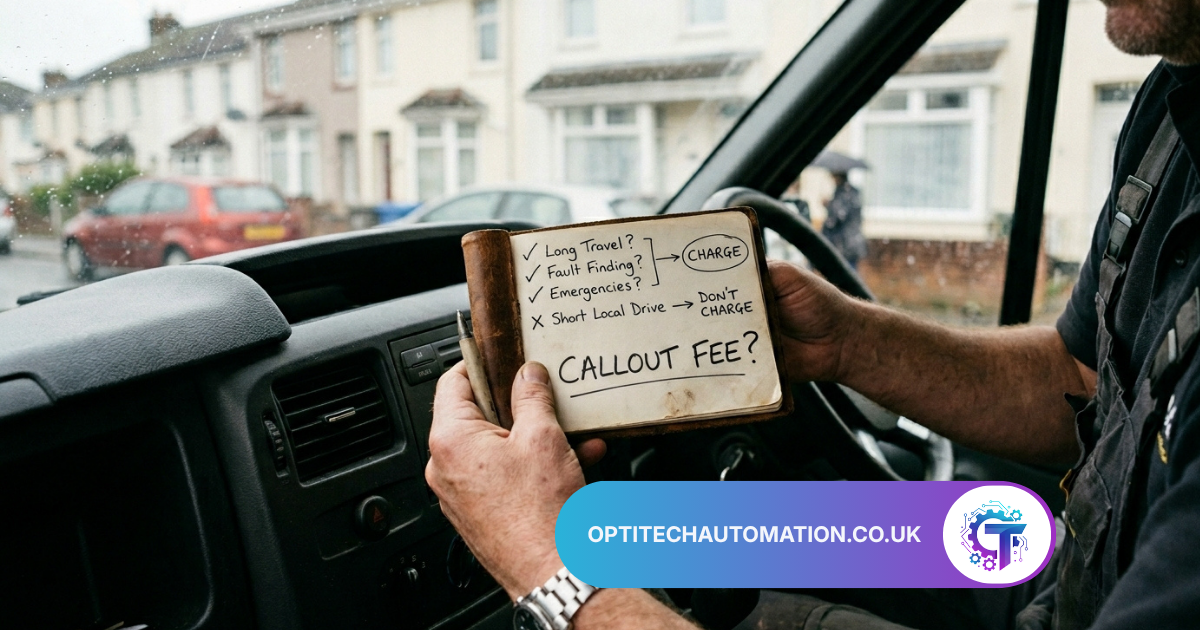
- Hourly works for callouts, diagnostics and small unpredictable jobs where you can't see the end from the start. Whether a callout fee sits on top of that hour is a separate call, covered in should I charge a callout fee on small jobs.
- Day rate works for longer site jobs and gives the customer a clean number. Build it off your hourly rate × a full billable day, not × eight optimistic hours.
- Fixed price works when you know the scope. It rewards your speed: if you're efficient, you earn more per hour, and the customer gets certainty.
The "always fully booked" signal
If you are booked solid for weeks and turning work away, you are almost certainly undercharging. A fully booked diary feels like success, but it's actually the market telling you your prices are too low. The right rate leaves you busy but not buried, and earning properly. When you're at this point, it's time to read our guide on whether to raise your prices and how to do it without losing customers.
Scorecard: should I be charging more?
Score each line 0, 1 or 2 and add it up.
- I've actually run the (take-home + costs) ÷ billable hours formula. No = 2, roughly = 1, yes and I'm above it = 0.
- I'm fully booked and turning work away. Always = 2, sometimes = 1, rarely = 0.
- Customers never push back on my quotes. Never = 2, occasionally = 1, often = 0.
- I'm hitting my target take-home wage. No = 2, close = 1, yes = 0.
0 to 2: Your pricing is healthy, so hold steady and review annually. 3 to 5: You're leaving money on the table, so raise on new enquiries now. 6 to 8: You're significantly undercharging, so rework your rate from the formula up this week.
The rate you set is only the rate you get if the quote and the invoice hold, and the live demo shows both of those moving.
Frequently asked questions
Do I have to charge VAT on my hourly rate?
Only if your turnover exceeds the VAT threshold (£90,000 as of 2026) or you've registered voluntarily. Below that, you don't add VAT. Above it, your prices effectively rise 20% for non-VAT-registered customers, so plan for that crossover carefully, because it is the one price change your customers did not ask for.
How much should I mark up materials?
A 10 to 20% markup on materials is standard and fair, because it covers your time sourcing, collecting, and the risk of waste or returns. You're running a business, not a delivery service, and the merchant run is time you never get back.
Can I charge more than my competitors?
Yes, and you often should. Price competes on more than the number: reliability, turning up when you say, clean work and clear communication command a premium. The cheapest tradesperson is rarely the busiest with good customers. They are usually the busiest with the difficult ones.
Should I charge a premium for emergencies and out-of-hours?
Absolutely. Evening, weekend and emergency work should carry a 1.5 to 2 times multiplier. You're sacrificing your own time and responding fast, and that has real value and customers expect to pay for it. Write the bands down before the phone rings out of hours.
How often should I review my rate?
At least once a year. Costs creep up constantly, fuel, insurance, materials, and if you don't move with them you take a quiet pay cut every year you stand still. Put the review in the calendar the same week every year and it will actually happen.
Key takeaways
- Price the business, not the favour. Your rate has to cover van, insurance, tools, certs and admin, not just the hour you're stood there.
- Use the formula. (Target take-home + costs) ÷ billable hours gives you your real minimum rate.
- Billable hours are far fewer than working hours. Travel, quoting and admin are unpaid, so your rate must absorb them.
- Fully booked means underpriced. A solid diary you're turning work away from is the market telling you you're too cheap.
- Match the model to the job. Hourly for callouts, day rate for site work, fixed price to reward your speed.
- Review yearly. Standing still on price is a pay cut, every single year.
Knowing your number is one thing. Protecting it across every job is another. OptiTech Automation gives you clean quotes, deposits taken up front and invoices that chase themselves, so the rate you set is the rate you actually get paid. See how it works on our pricing page, get in touch for a straight conversation, or start your onboarding when you're ready.
Keep reading


New here? See how OptiTech Automation works or view pricing. Or see what these figures mean for your business, in your own numbers.
Letters to the editor
Leave a letter
Add your name to the conversation. Approved letters appear within a day.