
OptiTech Automation · Original research · August 2026
What UK tradespeople charge for a call-out in 2026
We went to the pricing pages of 130 UK trade businesses (plumbers, electricians, gas and heating engineers, drainage firms, locksmiths and appliance-repair engineers, across all twelve UK regions) and recorded exactly what they publish. Among the 73 firms that state a figure, the median standard-hours minimum is £85 (middle half £67 to £102). 45% advertise "no call-out fee", but 9 of those still publish a first-hour minimum. Out-of-hours attendance costs about 1.47× the daytime figure. Every row links to the page it came from.
By Cristian Moise, founder · Data accessed 18 August 2026
The published price of getting someone to your door
Search “how much is a call-out fee” and you get cost guides built on averages nobody can trace. So we did the slower thing: we went to the pricing pages of 130 UK trade businesses and wrote down exactly what they publish. Three things stood out.
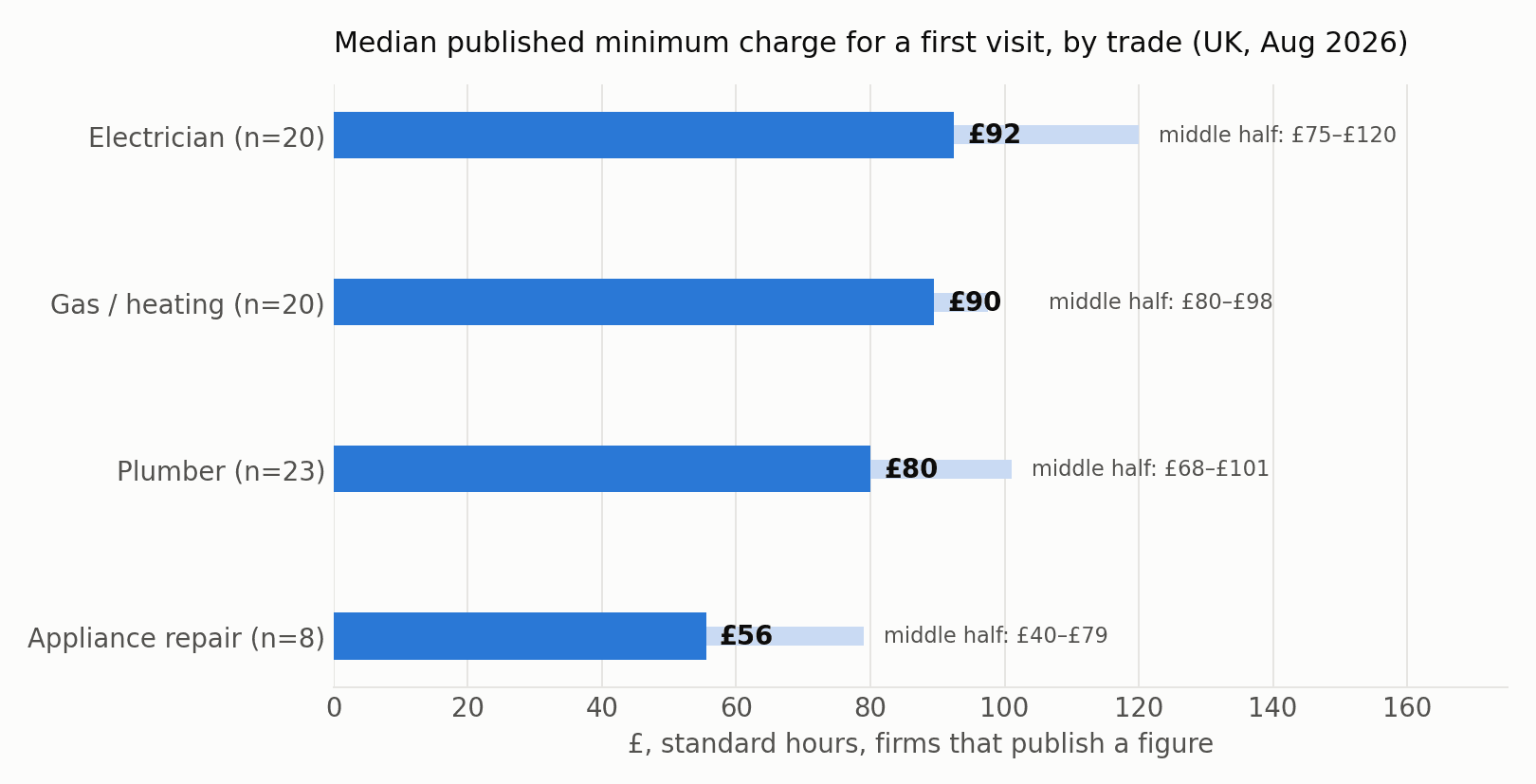
The typical published minimum for a standard-hours visit is £85, with the middle half between £67 and £102. By trade: electricians £92, gas and heating engineers £90, plumbers £80, appliance repair £56. Locksmiths and drainage firms rarely publish a call-out figure at all.
Who says “no call-out fee”, and what it hides
58 of the 130 firms (45%) say “no call-out fee” somewhere on their site. In drainage it is almost universal, and it is the norm for locksmiths, because both trades price fixed jobs. But 9 of those 58 firms also publish a first-hour minimum. one states “we do not charge for a call-out” alongside a £130 + VAT one-hour minimum. Legally those are different things; to the customer, the number on the invoice is the same.
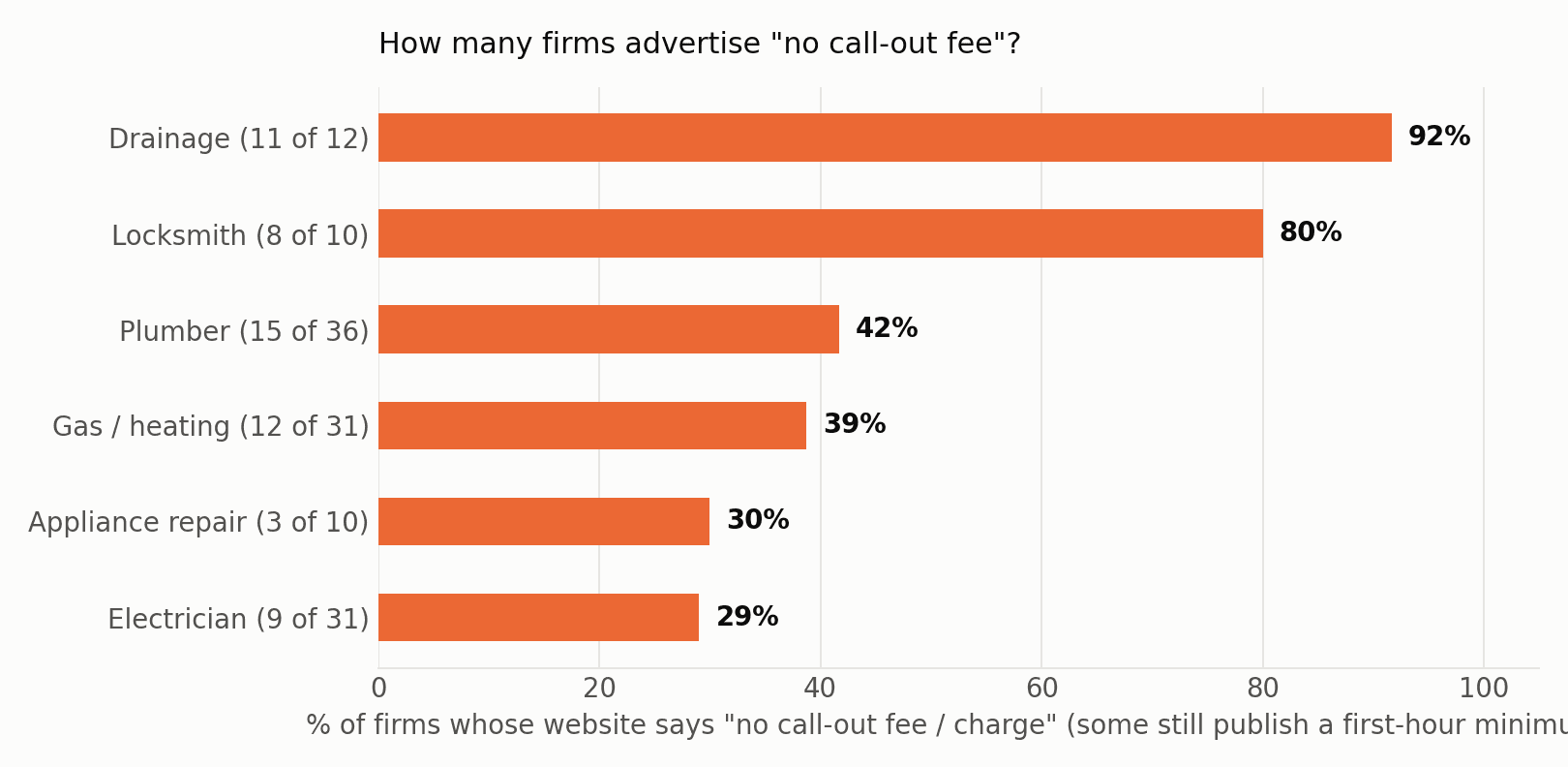
The consumer takeaway: “no call-out fee” tells you nothing about the minimum bill. Ask what the first hour costs and whether a diagnostic visit is charged if you don’t proceed. The owner takeaway: the firms that publish a clear first-hour figure and say what it includes are the ones removing arguments at the door.
Regional differences are smaller than the London premium suggests
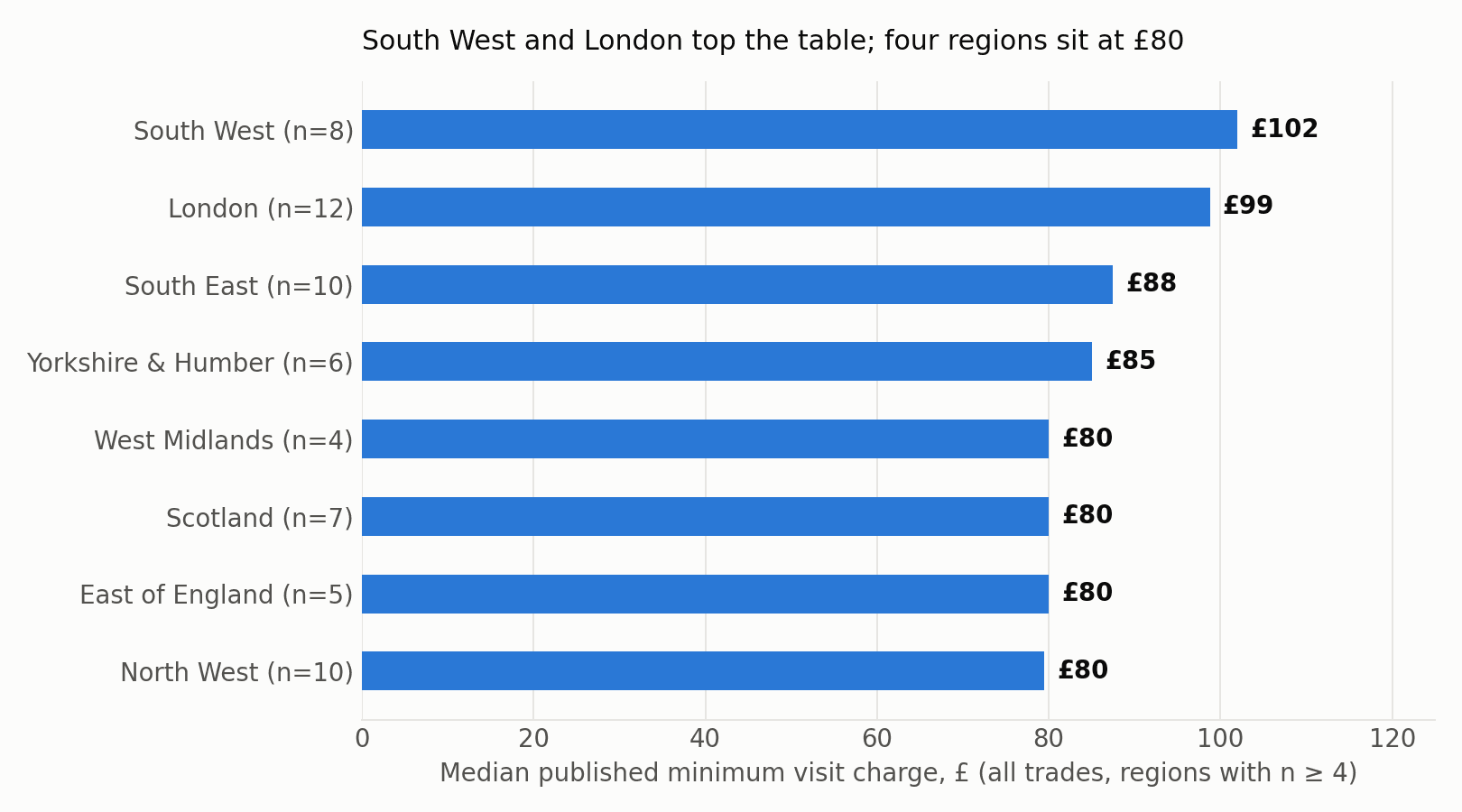
For regions with at least four published figures, medians range from £80 to £99 in London and £102 in the South West. Across the three core trades the London median is about 15% above the rest of the UK, less than the gap between a cheap and an expensive firm on the same street.
The out-of-hours premium
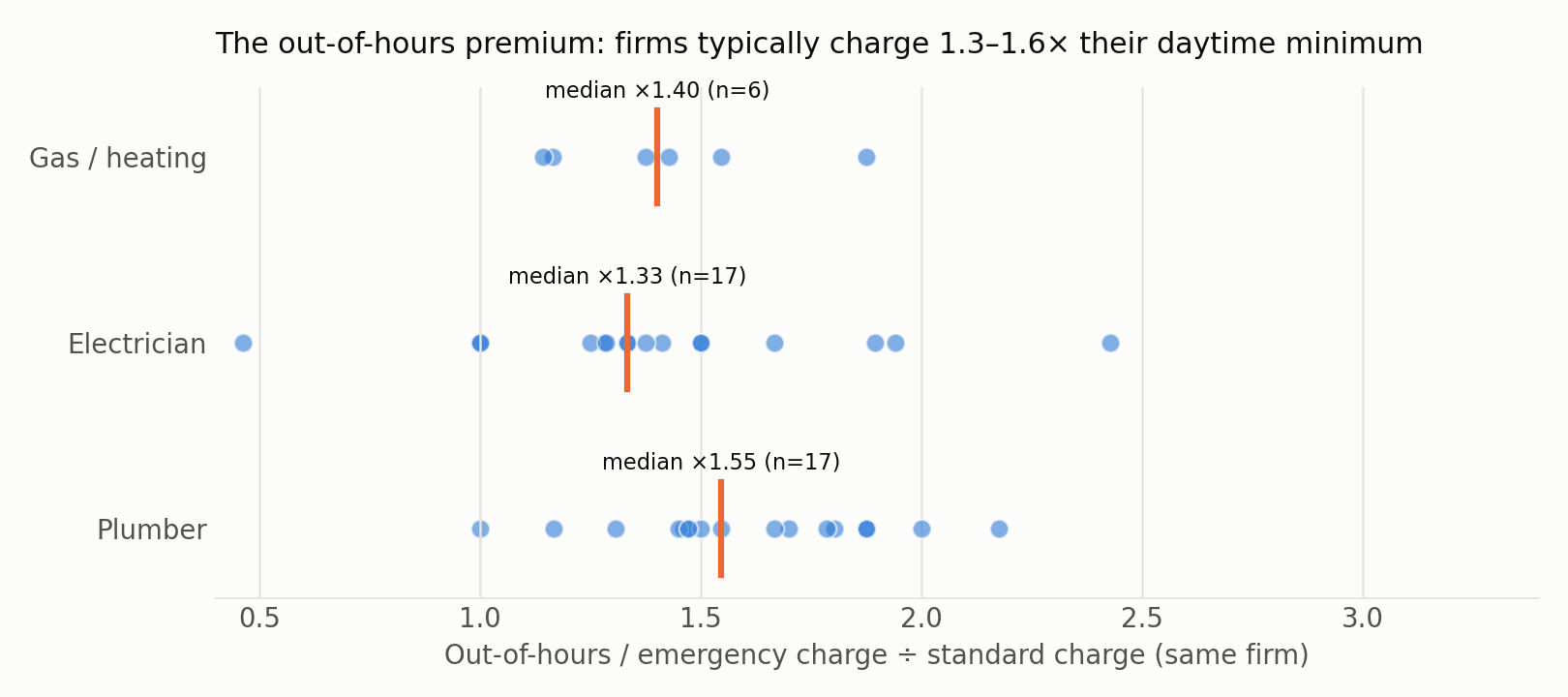
Most firms that publish both figures charge between 1.3× and 1.7× their daytime minimum for evenings and weekends, and it steps up again overnight. Plumbers charge the steepest premium (about 1.55×), electricians the smallest (about 1.33×). Published emergency minimums cluster around £115 to £135.
Half of firms don’t say whether VAT is included
50% of firms publish a price with no indication of VAT treatment. For a customer that is a potential 20% surprise; for the firm it is a pricing-transparency exposure. We did not normalise prices for VAT, because we cannot know the treatment where it isn’t stated, which is precisely the problem.
Download the data
Every figure in this study, by firm, with the exact wording and a link to the source page. Free to reuse with a credit and a link back to this page (CC BY 4.0).
Method
A census of published prices, not a survey of charged prices. We located UK trade businesses via web search on 18 August 2026 and recorded only figures visibly stated on the firm’s own website; directory listings and third-party price guides were excluded. Where a range was published, the midpoint was used and the range kept in the notes. Firms that publish are self-selected towards transparency and the confident end of pricing, so read these as published, not average, prices. Prices are as displayed and not VAT-normalised, and medians are rounded to the nearest pound (exact values are in the dataset). All figures were correct on the access date; websites change.
OptiTech Automation builds booking and job-management software for UK trade businesses. This study is independent of any customer relationship; no firm in the sample was contacted or is a customer.
The fee that’s already paid is never disputed.
Whether or not you charge a call-out fee, the argument at the door happens when the customer didn’t know the number. OptiTech Automation puts your price on the booking page, repeats it in the confirmation, and takes it as a card deposit at booking, into your own account.